Focus of this article:Floorp Browser is a free open source browser based on Firefox (Gecko core). It is developed by the Japanese Ablaze team. It features a highly customized interface with built-in vertical paging, Workspace, dual sidebars, and PWA support, covering almost all the functions needed for daily use and work.
There are quite a lot of browser choices on the market. Many users are abandoning Chrome and switching to the Firefox browser. The main reason is Firefox’s higher privacy and freedom. However, the native Firefox interface has a bright interface and limited customizable functions. If you want to get more flexibility in the Firefox architecture and make the browser more suitable for everyday use, you should look for another derivative version. Among them, Zen Browser is the one that is being talked about a lot lately, while LibreWolf is more focused on security and privacy. The “Floorp Browser” that will be introduced in this article is also based on Firefox and is very suitable forUsers who want to maintain the freedom of Firefox while pursuing more powerful customization and paging management capabilities.
What is Floor Browser?
Floorp Browser is an open source web browser based on Firefox (Gecko core), developed by the Japanese Ablaze team, withHighly customizable interface, vertical paging, Workspaces, dual sidebars, and PWA supportFunctions like these meet the needs that most users will use in their daily life and work. Because it is Firefox-based, all Firefox extensions can be installed, and data such as bookmarks, passwords, history and page numbering can be synchronized in real time after logging into a Mozilla account.
Floorp Browser supports three major operating systems: Windows, macOS and Linux. It has a built-in multi-language interface including Traditional Chinese. It features rich functions, high customization flexibility,Supports DRM (can watch streaming services like Netflix normally). Overall, while maintaining the stable core of Firefox, Floorp Browser makes up for the shortcomings of the original version in interface and page management, making it suitable for users who want a personalized operating experience. Especially for people who originally used the Firefox browser, the switch is almost painless and they can get started quickly.
Comparison of Floorp, Zen Browser and LibreWolf
Floorp, Zen Browser, and LibreWolf are all derivative browsers based on Firefox, but their positions are different. If you are still unsure between the three, check out the table below to quickly understand the differences and suitable candidates.
| project | Floorp | Zen Browser | Free Wolves |
|---|---|---|---|
| development resources | Japanese Ablaze Troopers | Zen open source community | Open source community |
| Main placement | Highly customizable and feature rich | Simple and beautiful, Arc style productivity | Pure privacy and security improvements |
| Vertical page | Built-in support | Built-in (core features) | Optional (native to Firefox) |
| Workspace | own | Yes (core features) | There isn’t any |
| Level of interface customization | tall | Height (via Modification) | Low (privacy focused) |
| Privacy improvements | Medium (inherits Firefox default) | middle | High (clear telemetry, default hardening) |
| DRM/Streaming | Support (can watch Netflix) | support | Off by default, needs to be enabled manually |
| Account synchronization | Firefox Account | Firefox Account | Off by default, can be enabled manually |
| Suitable for objects | Want the freedom of Firefox plus high customization | Want beautiful and productive pagination | Privacy and security are paramount |
Website information
Use teaching
Download and install Floorp Browser
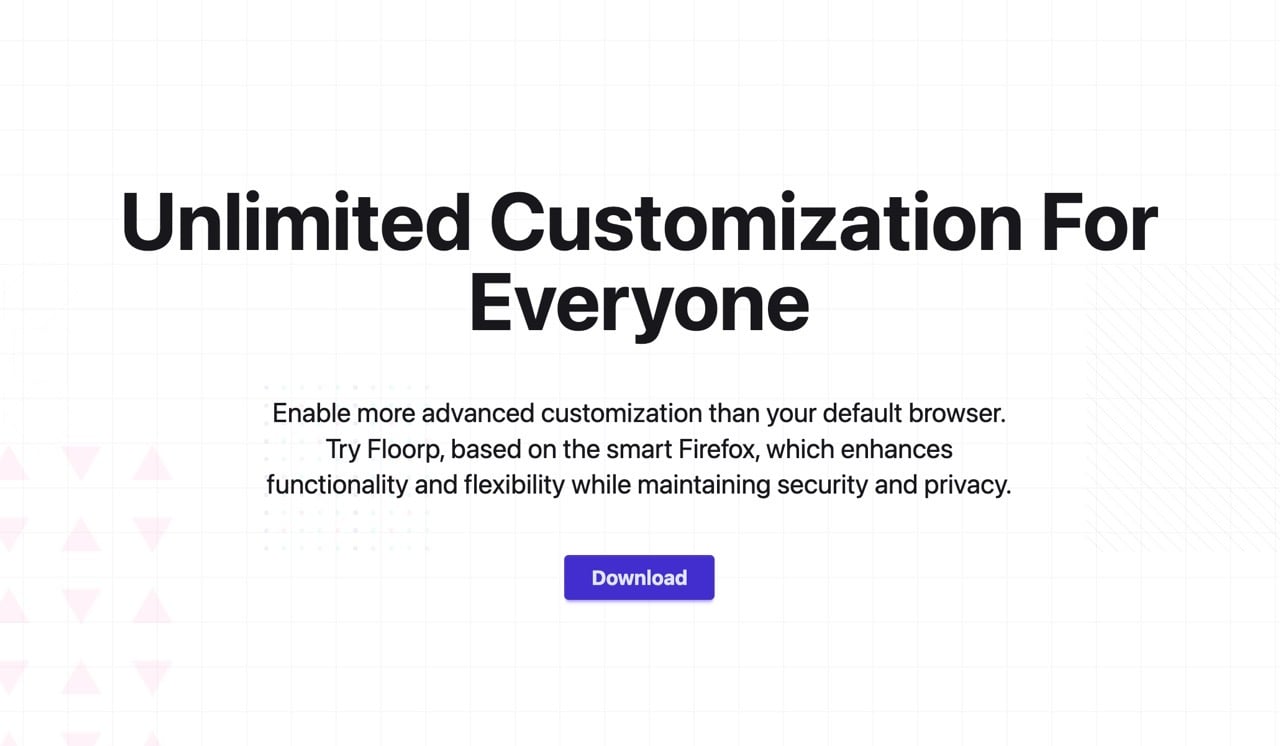
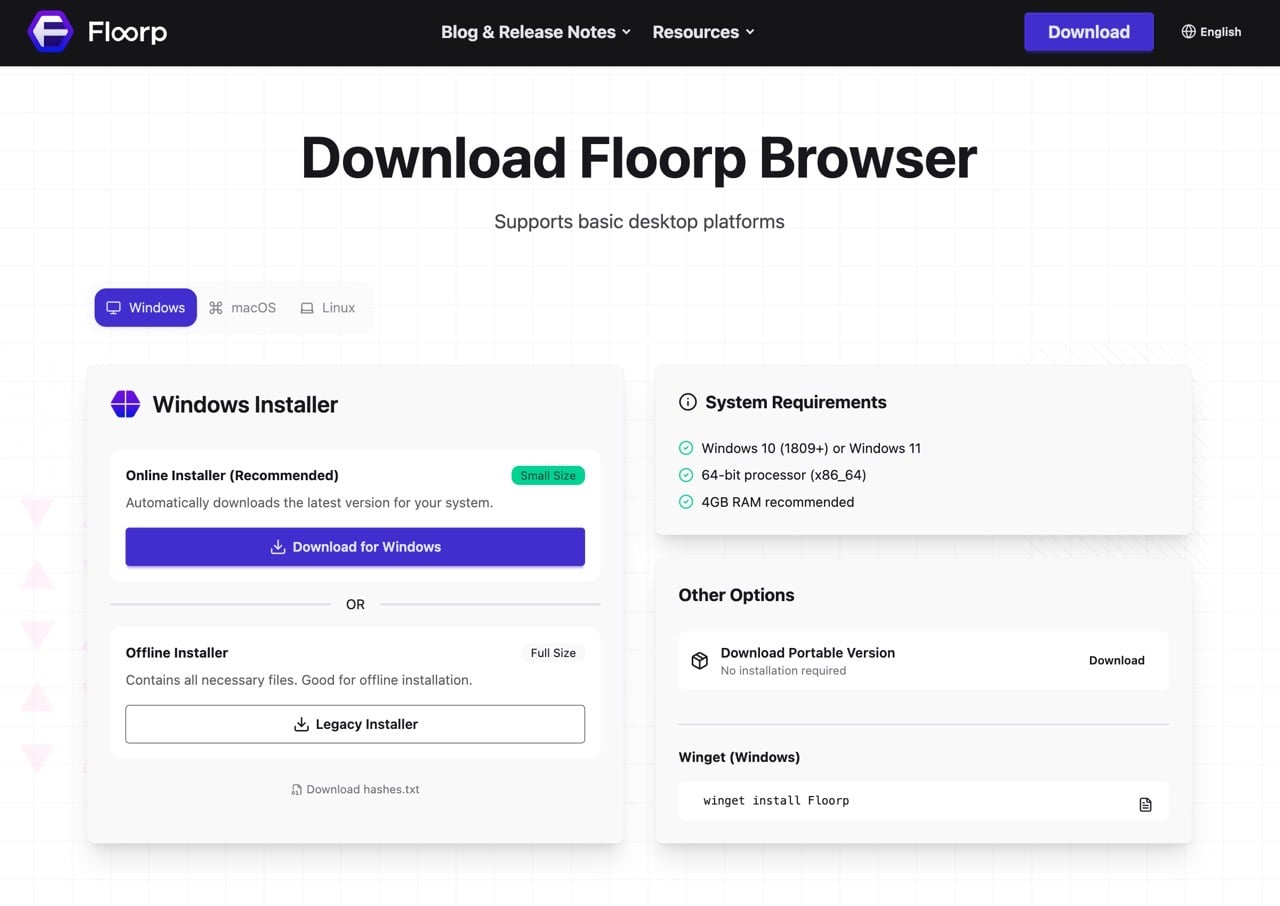
Go to the Floorp Browser website and click “Download”Go to the download page to find the Windows, macOS and Linux versions and installation instructions.
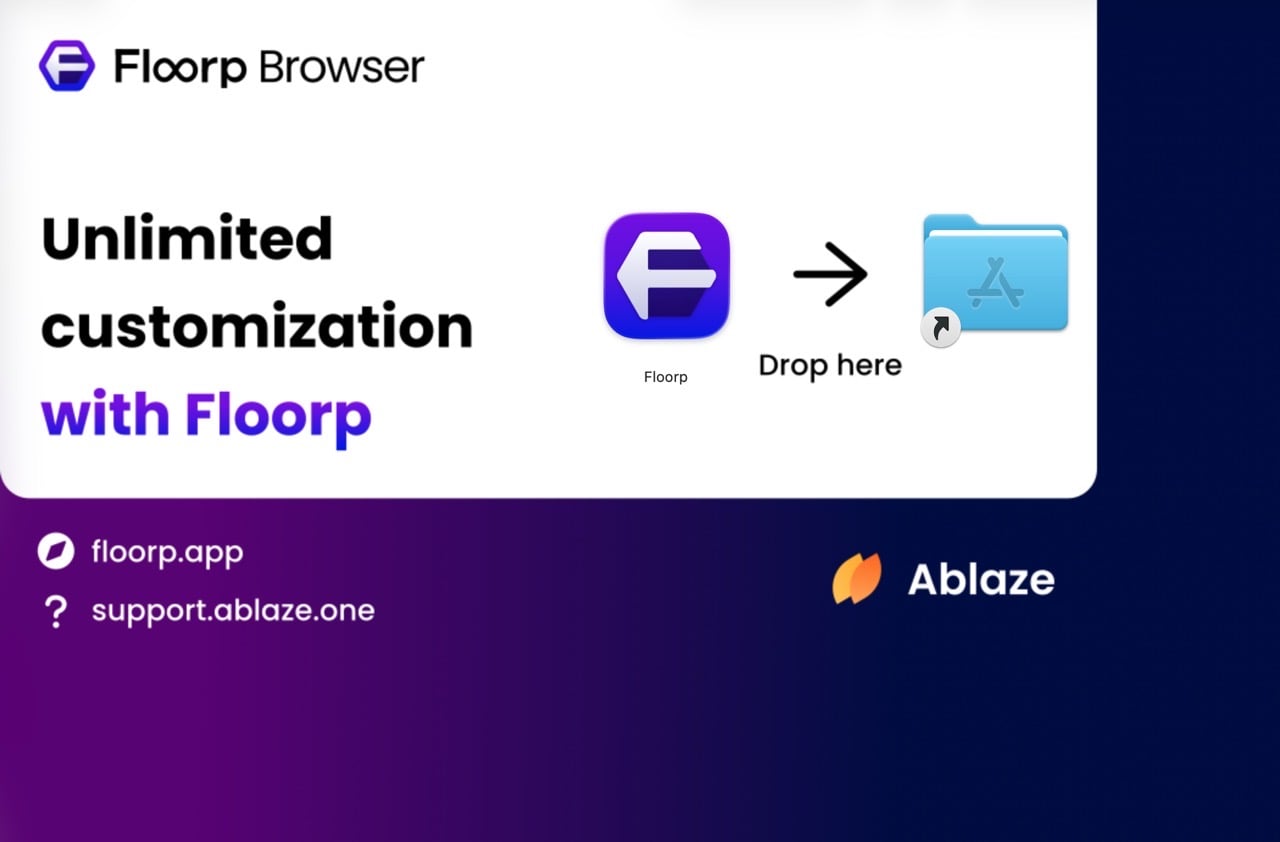
For example, after running the Mac version, drag Floorp to the applications folder and start using it.
First time startup and setup guide
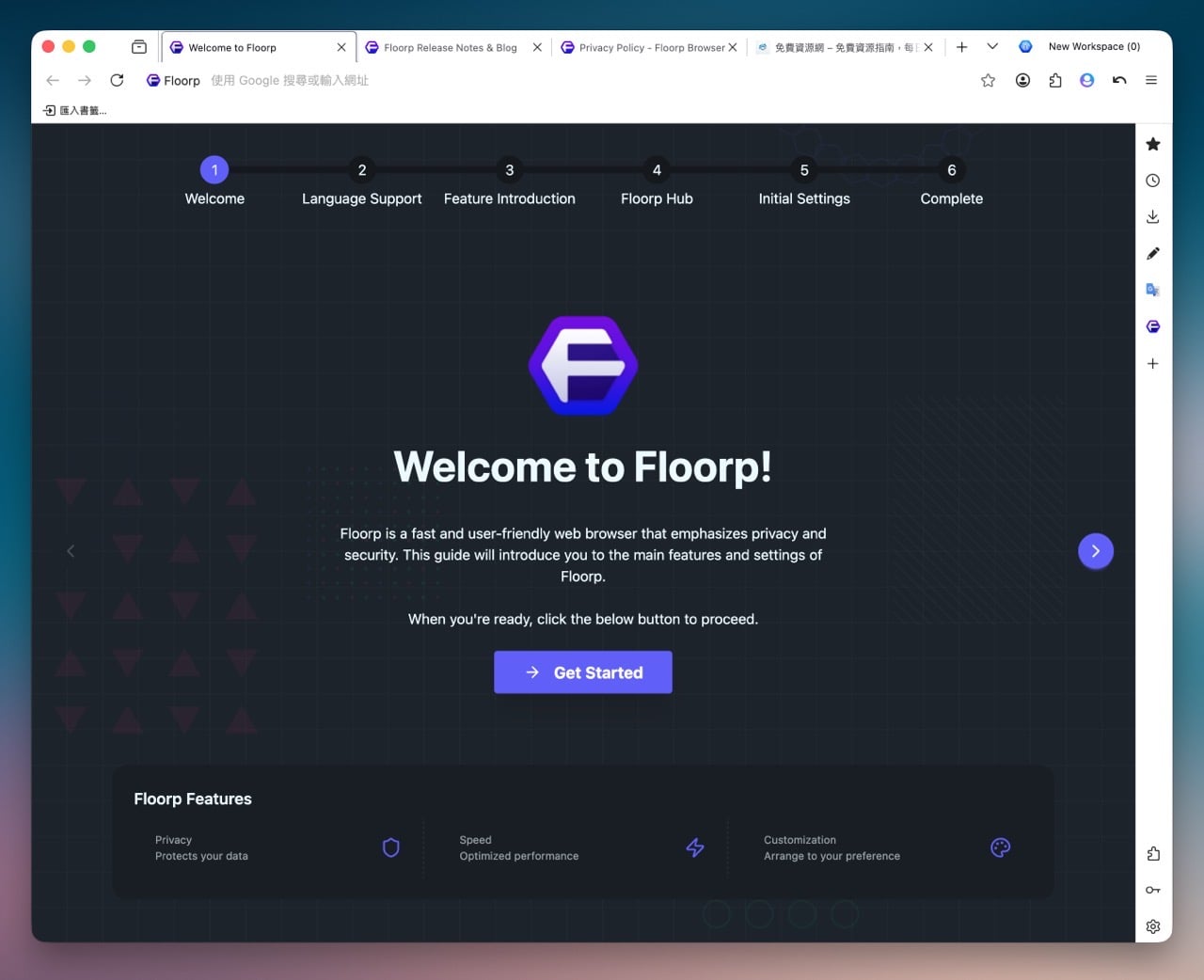
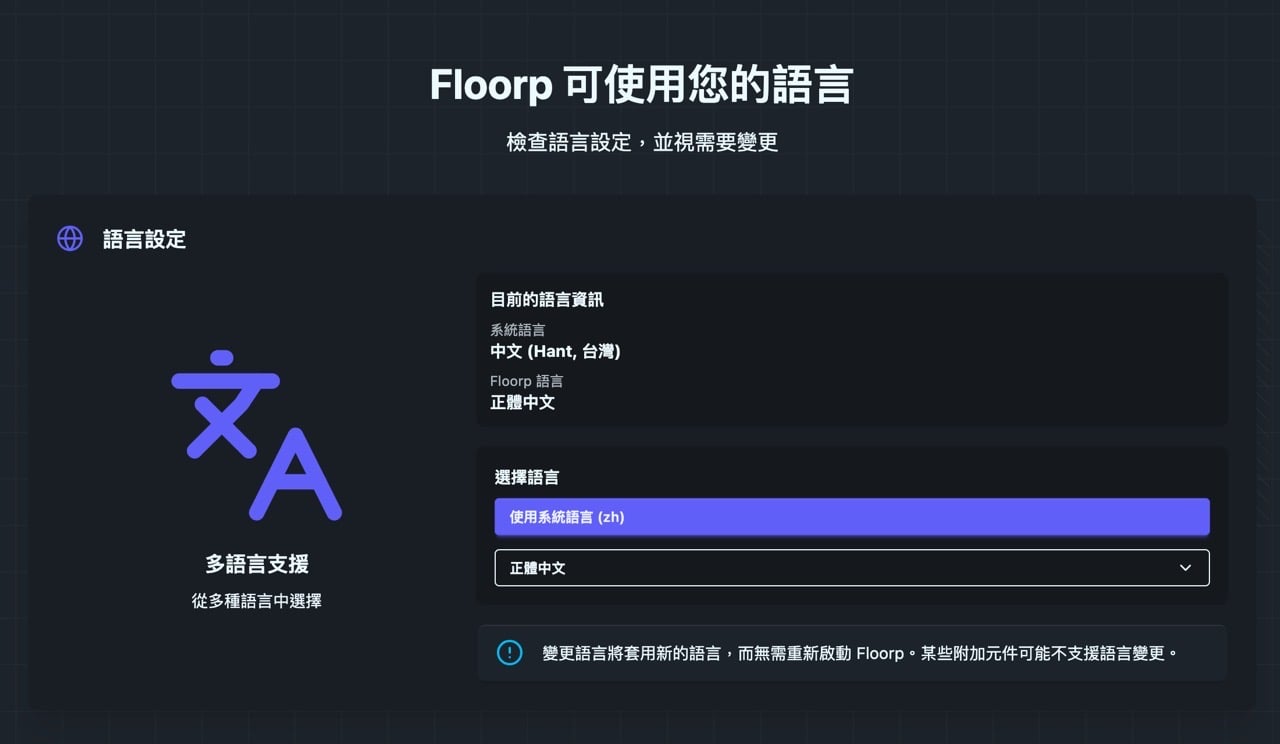
When you start Floorp Browser for the first time, a setup wizard will appear. The first step is to choose the language you want to use. This section has the same Traditional Chinese language system as Firefox.
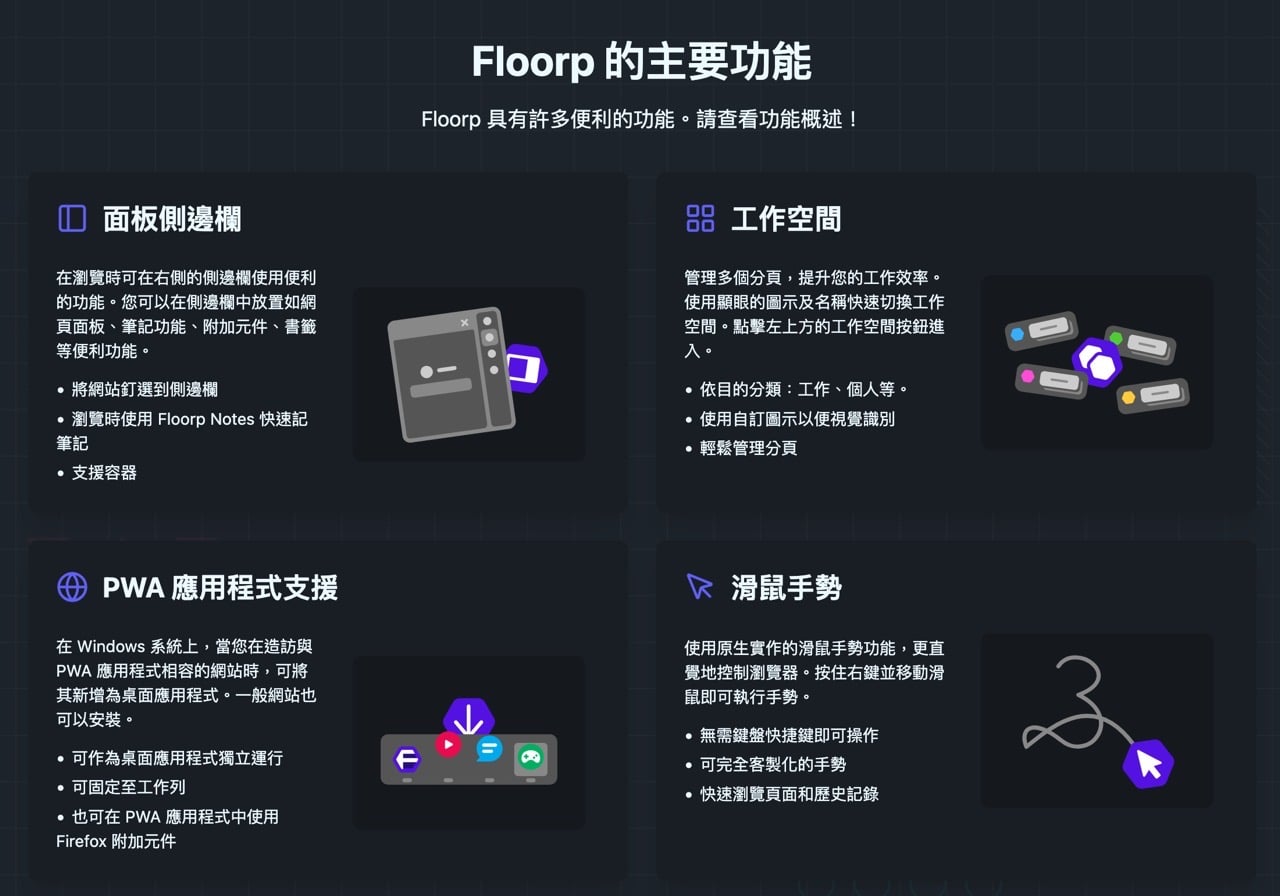
Then there will be an introduction to Floorp’s main functions such as sidebar, workspace, PWA application support, mouse gestures, etc.
The Floorp browser collects most of the proprietary settings options in the “Floorp Hub” settings center.can be imagined as a Floorp console exclusive. You can also find this option from the browser settings page later. Designs that integrate all customization functions into one page are highly recommended and will not be confused with native Firefox options.
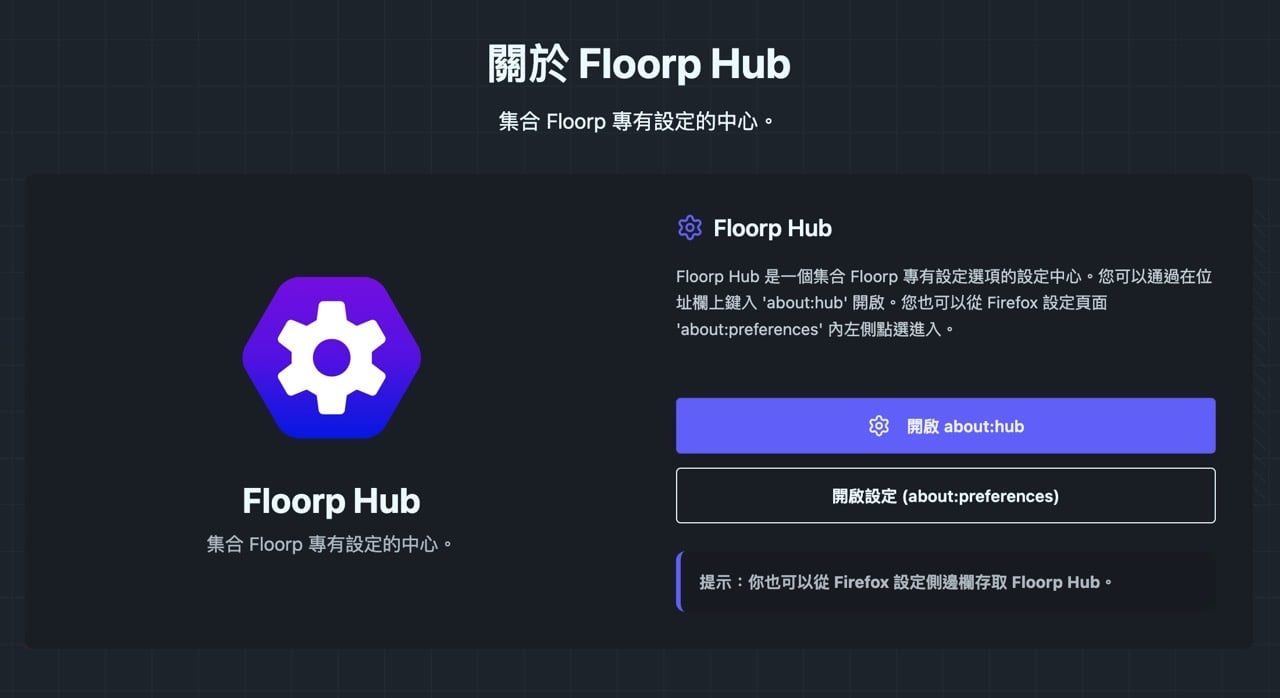
After completing the setup instructions, you can start using Floorp Browser and choose whether to set it as your default browser.

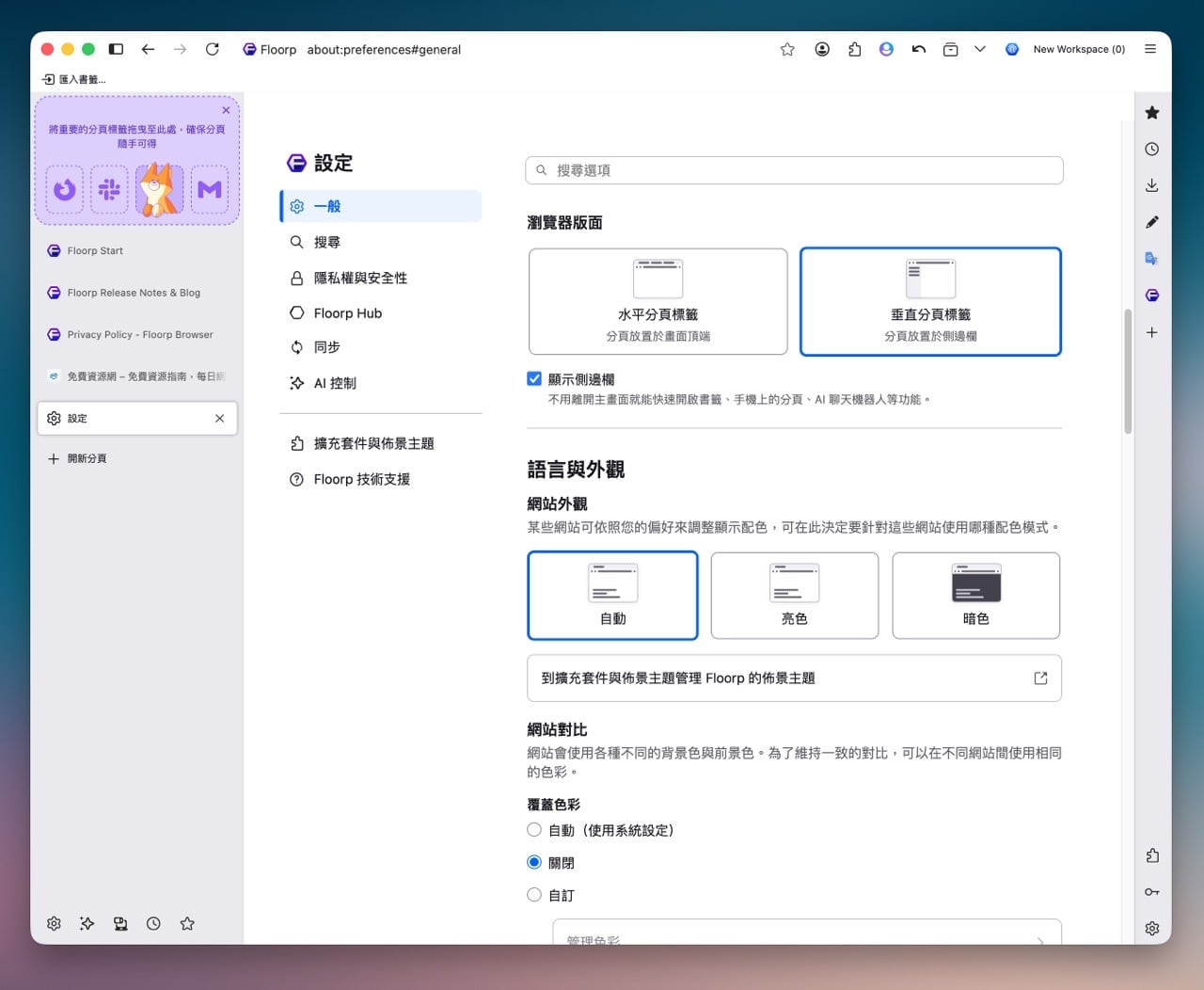
Floorp browser has a built-in “vertical tab pagination” function, which can display browser pagination vertically in the sidebar.For wide screen users, this feature is effective in maintaining space at the top and bottom of the screenit will be more convenient to browse.
Starting from version v12, vertical page labels use Firefox’s native implementation. If the “Paging Bar” style is customized in Floorp Hub, the system will also prompt the user to return to “Browser Layout” for settings. The switching mode of horizontal paging labels and vertical paging labels can be found from the “General” option in the settings.
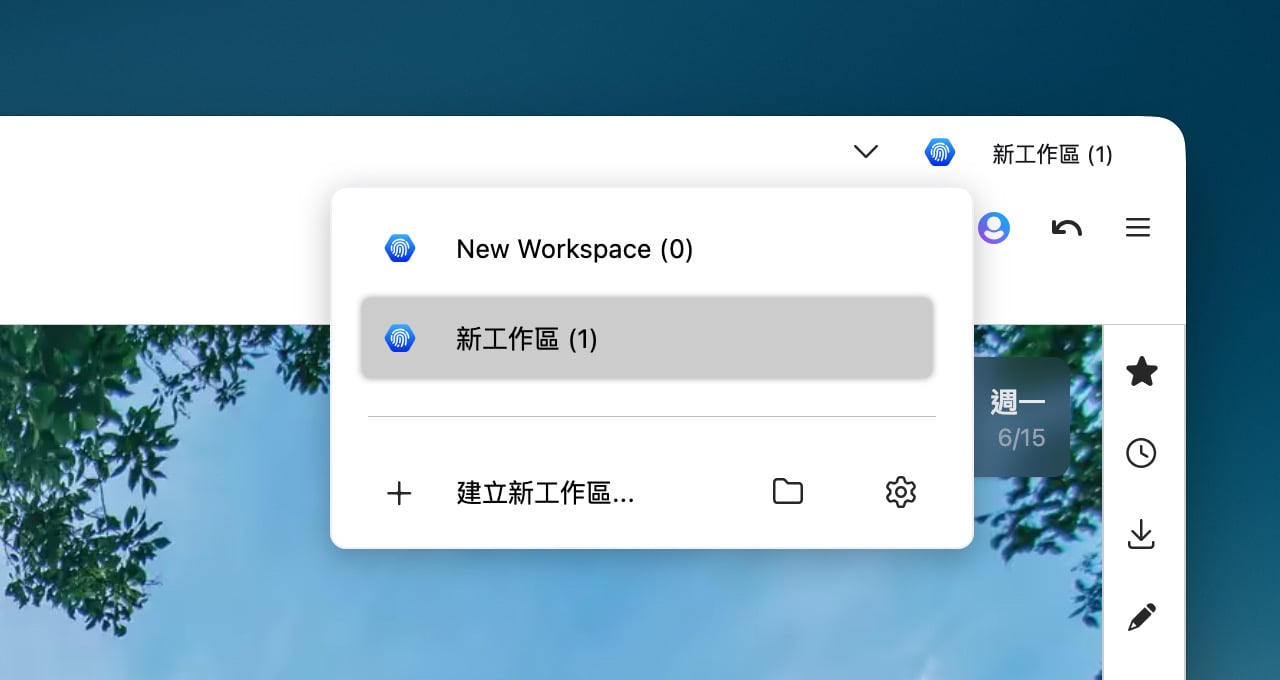
Create and change workspaces Workspaces
The browser also has a built-in “Workspace” function, which lets you create a new workspace or switch between different workspaces from the top right corner.
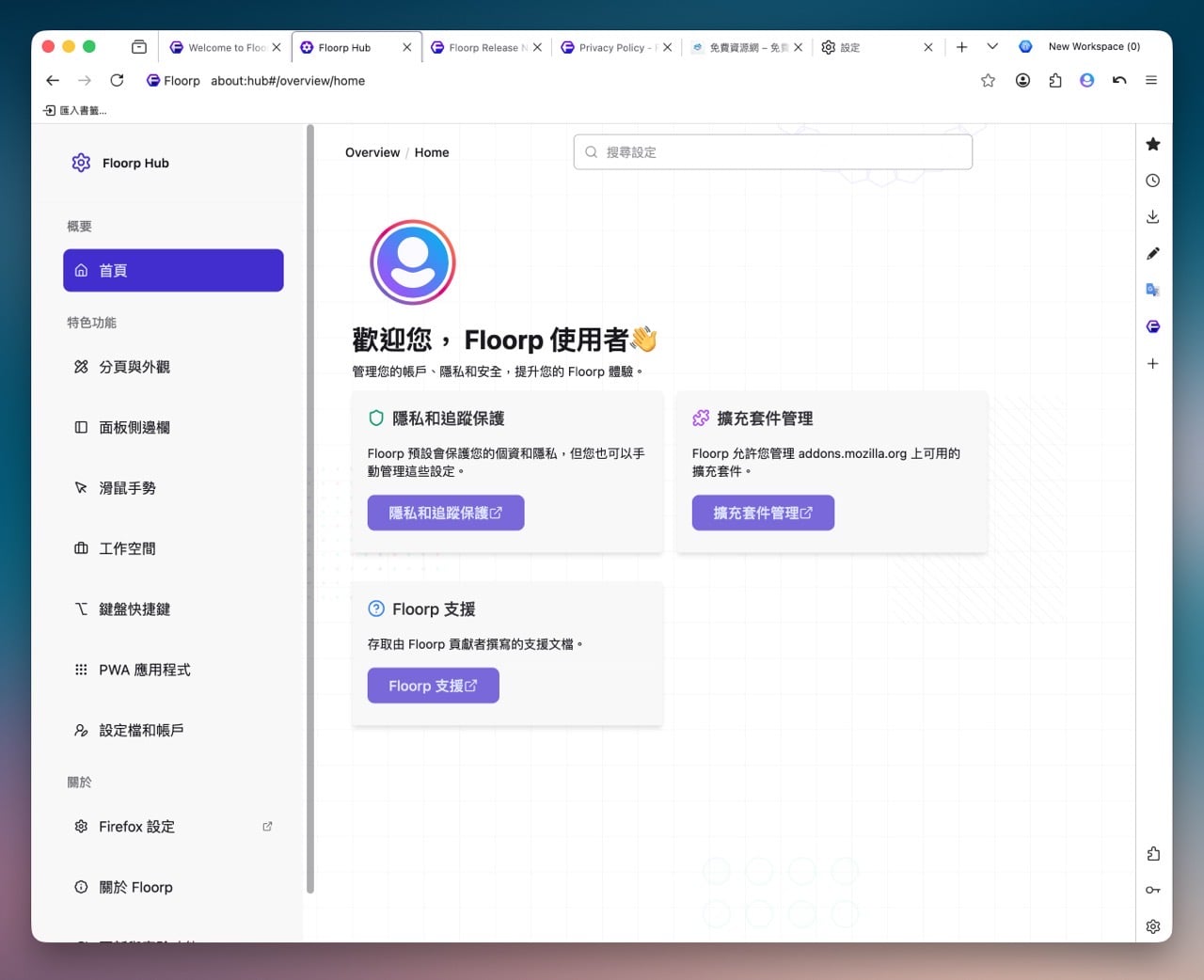
Customize the interface and functionality via Floorp Hub
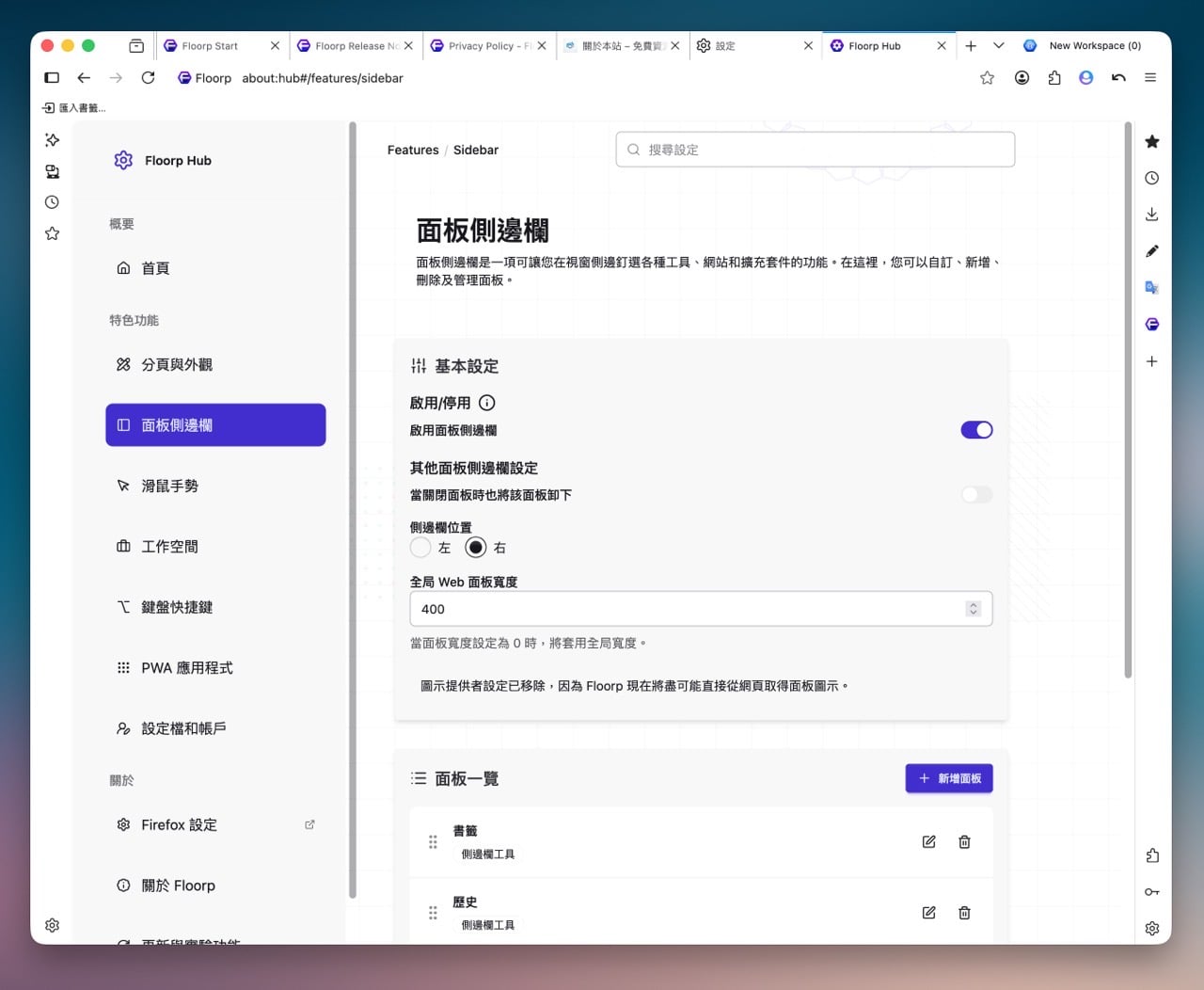
As mentioned previously, the Floorp browser concentrates all options on the “Floorp Hub” page. From here, you can customize the appearance of the interface (background, toolbars, page numbering position), or adjust functions such as mouse movements, keyboard shortcuts, PWA applications, and profiles.
It is worth mentioning that Floorp Hub is also an operating environment in Traditional Chinese, and all options and instructions will be clear and easy to understand.
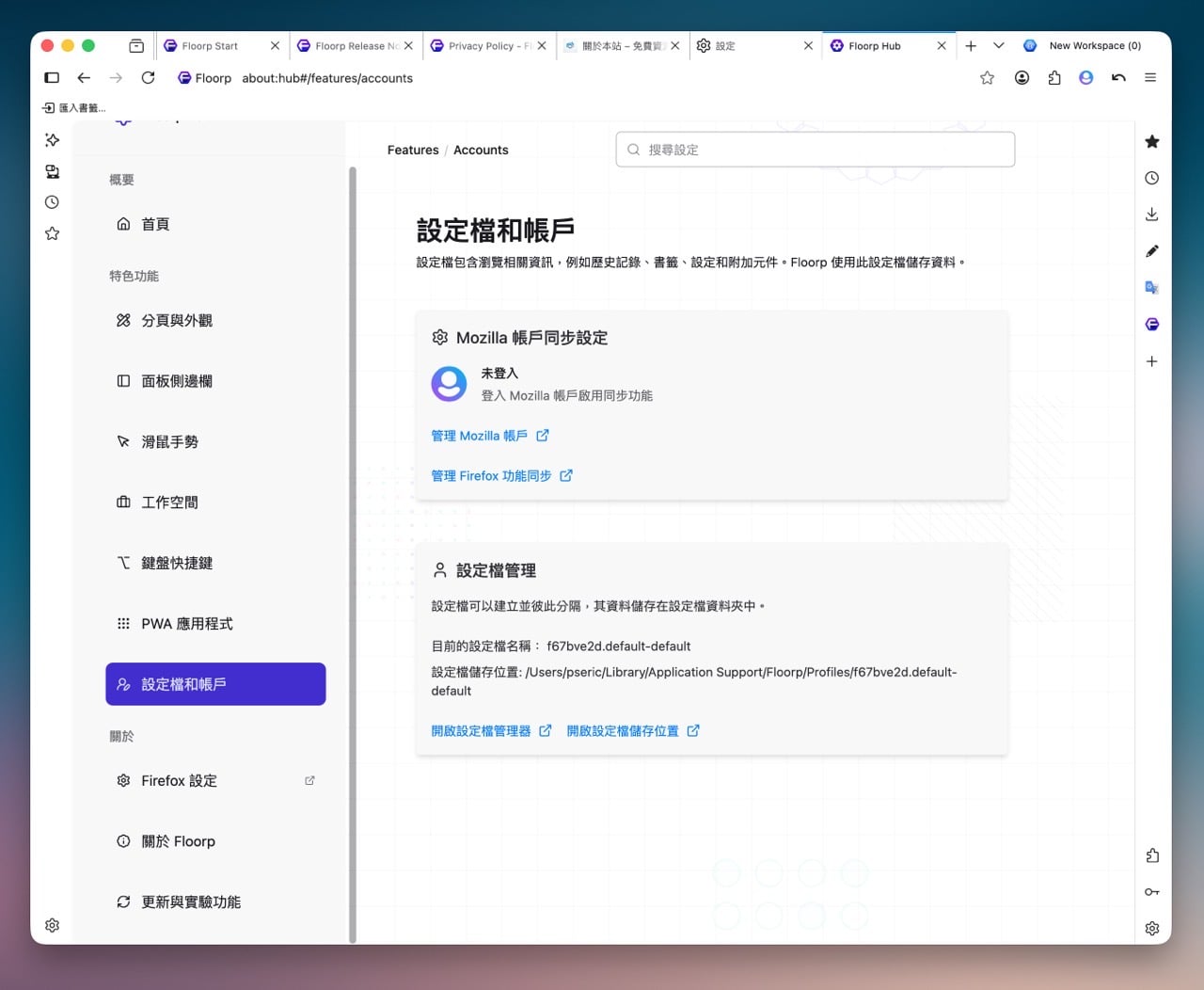
Sign in to your Mozilla account to sync data
The Floorp browser itself supports the Mozilla account synchronization function. As long as you are logged in to your account, you can sync Firefox functions and settings and other data.
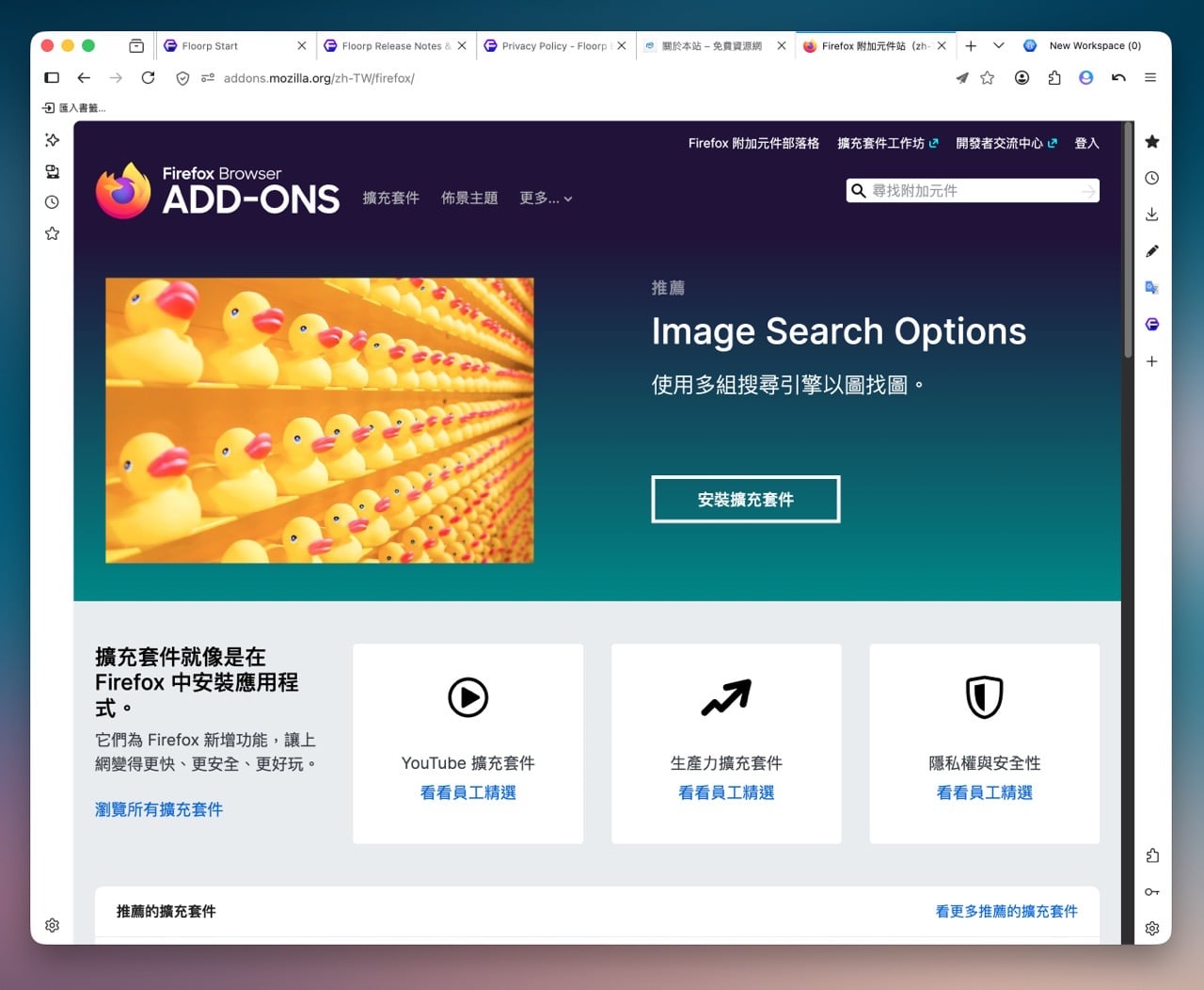
Install Firefox extensions and themes
If extensions are required, Floorp Browser is based on Firefox and is compatible with all Firefox browser extensions and themes.
Summarizing
Floorp Browser is one of the few browsers that combines the core of Firefox with a high level of customization. It has functions like vertical paging, workspace, dual sidebar, and mouse gestures built right into it. These are then managed centrally via Floorp Hub, which is all in Traditional Chinese, eliminating the need to install extensions and customize them one by one.
For users who feel native Firefox is a waste of time and don’t want to leave the Firefox ecosystem, Floorp makes up for the shortcomings in the interface and paging management. In addition, it supports DRM and can synchronize Mozilla account information, so it can be used and used every day.
If you’re looking for a Firefox browser with complete functionality and a high degree of freedom, Floorp Browser is worth taking the time to set up and experience.
This information was last reviewed in June 2026.
PakarPBN
A Private Blog Network (PBN) is a collection of websites that are controlled by a single individual or organization and used primarily to build backlinks to a “money site” in order to influence its ranking in search engines such as Google. The core idea behind a PBN is based on the importance of backlinks in Google’s ranking algorithm. Since Google views backlinks as signals of authority and trust, some website owners attempt to artificially create these signals through a controlled network of sites.
In a typical PBN setup, the owner acquires expired or aged domains that already have existing authority, backlinks, and history. These domains are rebuilt with new content and hosted separately, often using different IP addresses, hosting providers, themes, and ownership details to make them appear unrelated. Within the content published on these sites, links are strategically placed that point to the main website the owner wants to rank higher. By doing this, the owner attempts to pass link equity (also known as “link juice”) from the PBN sites to the target website.
The purpose of a PBN is to give the impression that the target website is naturally earning links from multiple independent sources. If done effectively, this can temporarily improve keyword rankings, increase organic visibility, and drive more traffic from search results.